
Rested: Redefining Discarded Comfort
What if we could give these materials another life without first breaking the mattress apart?
In the Netherlands alone, around 1.5 million mattresses are disposed every year. Stacked on top of each other, that would form a pile roughly 300 kilometers long — about the length of the country.
Most of these mattresses are eventually incinerated, even though the materials could still be useful.
Mattresses are made from different raw materials, often glued together to create a comfortable and supportive surface for the body. After years of use, we consider the mattress worn out and replace it.
That may be the right path for its original function. But does that mean the material itself has reached the end of its life?
The function may have ended. The material hasn't.
If a product is designed to be easily deconstructed, its components can potentially be reused or given a new life at relatively low cost. Most mattresses, however, are not designed this way. Their layers are often bonded together, making it difficult to identify, separate and reuse the individual materials.
Rested explores a different approach.
Instead of separating the mattress into its individual materials, Rested keeps the mattress largely intact and looks at what it can become in its existing form.
What if we don't have to deconstruct waste before we can reuse it?
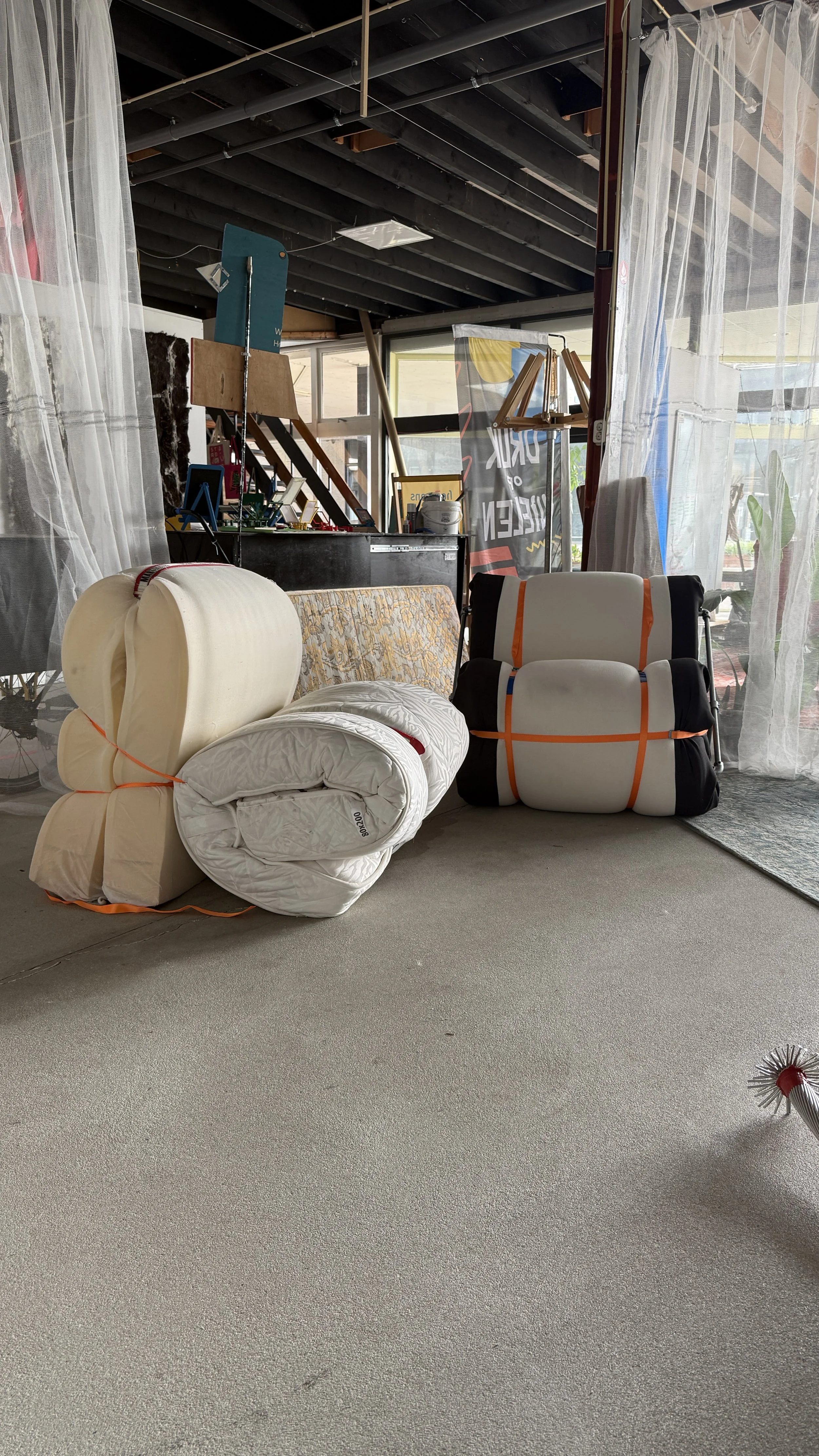
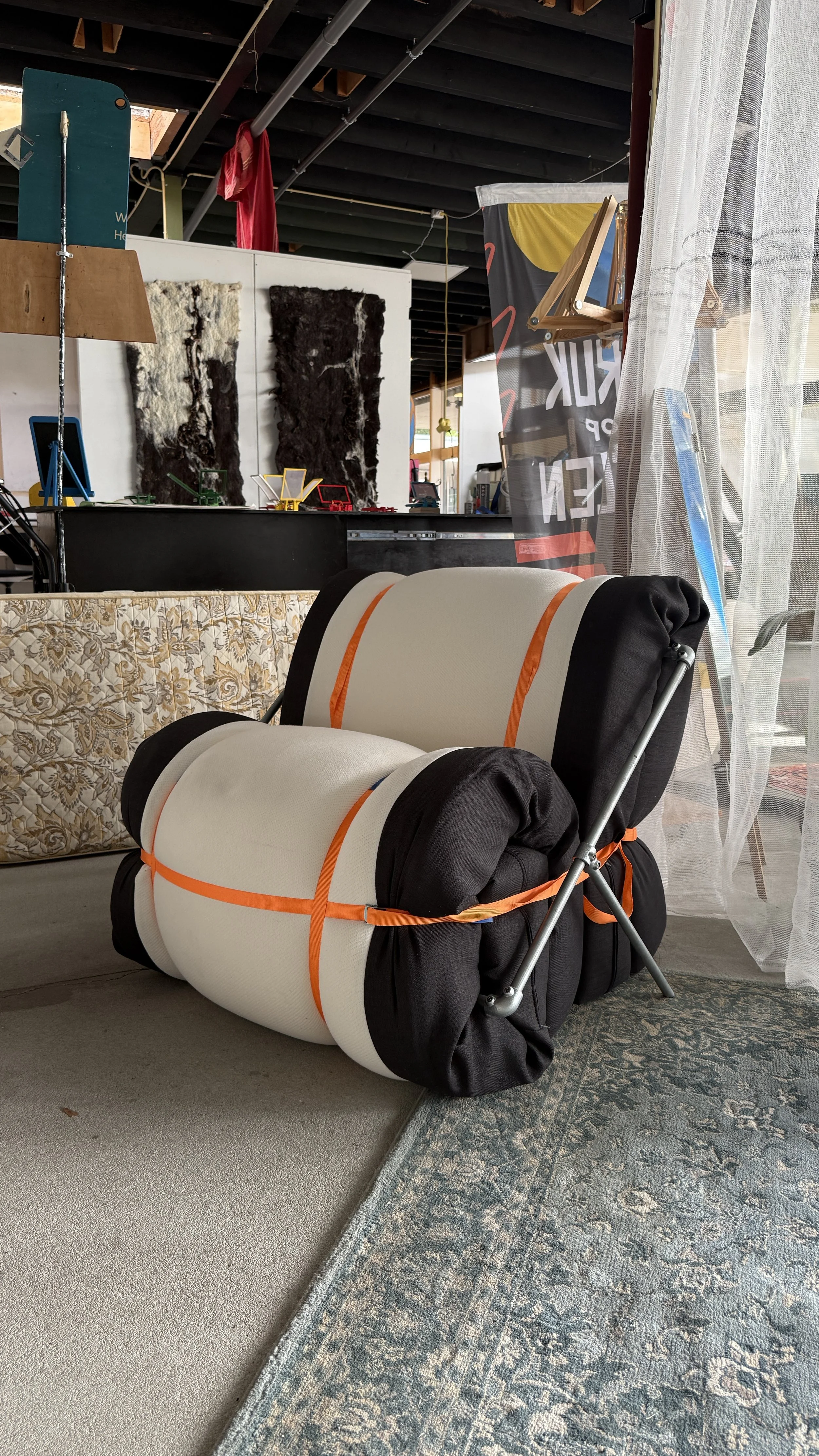
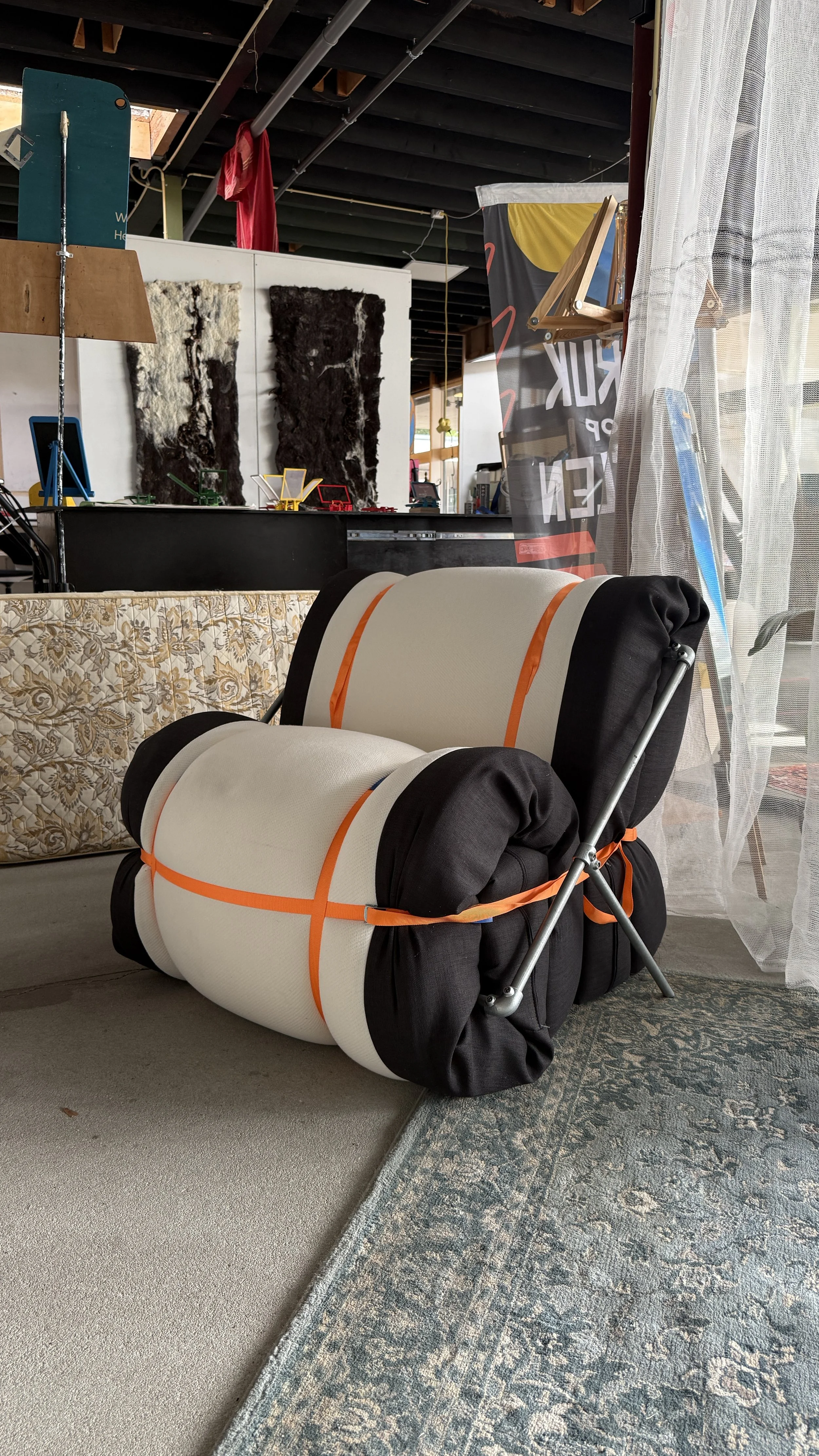
The first working prototype is made from two discarded mattresses: one rolled and one folded. Lashing straps hold the mattresses in their new shape, while a minimalist frame provides the necessary support.
Building the first prototype revealed something unexpected: every Rested object can be unique.
No two mattresses are exactly alike. Years of use, body weight, sleeping habits and previous construction all influence how a mattress supports the body. Instead of treating these differences as imperfections, Rested sees them as part of the material's character.
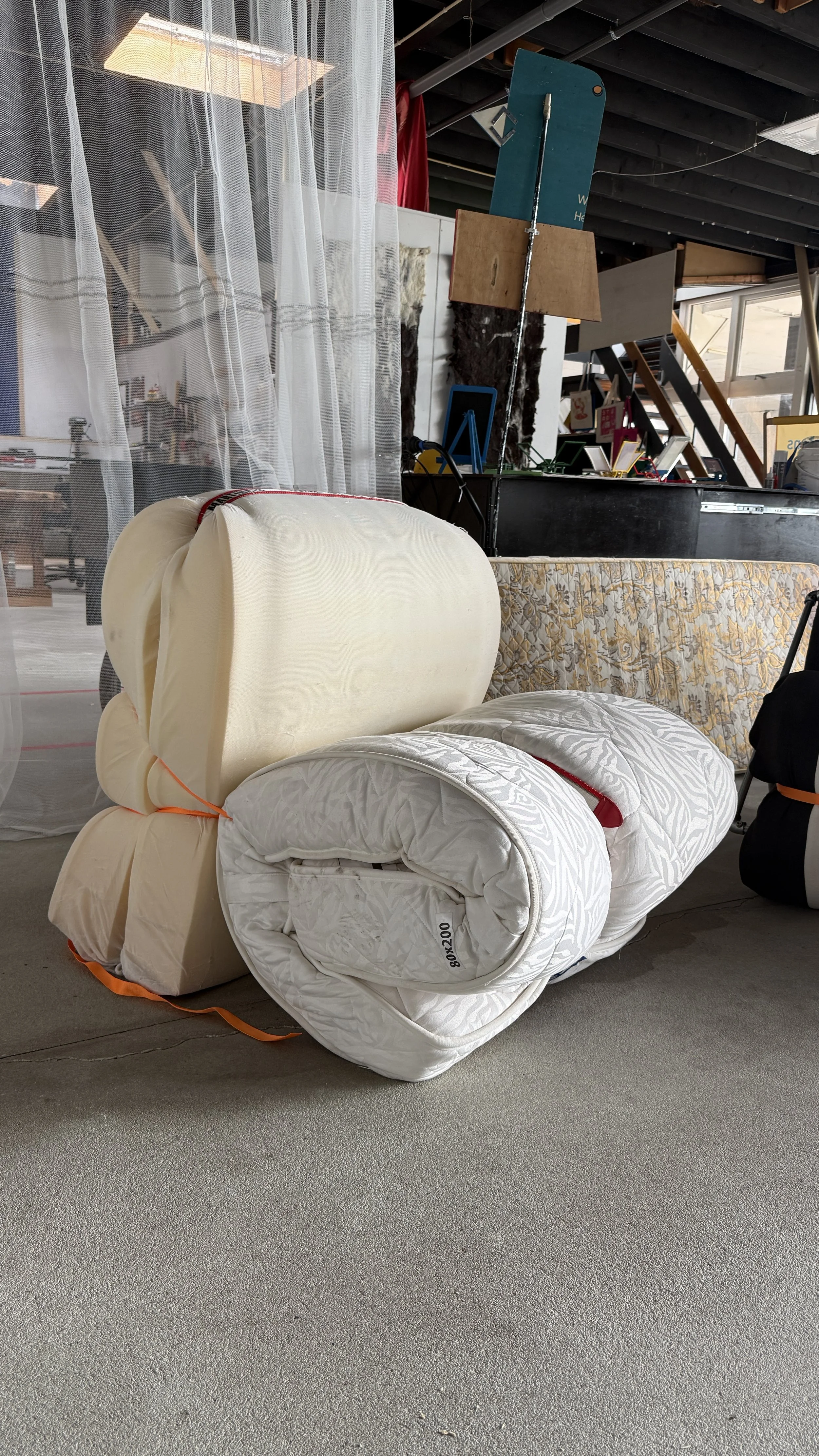
Rested started with a few discarded mattresses. I stacked them, folded them, rolled them and bound them into different shapes, exploring how their existing properties could be used in a new context.
Quite quickly, it became clear that the mattresses should take on a function close to their original one.
The material already knows how to provide comfort. The challenge is to give that comfort a new form.
A mattress is made for rest and relaxation. So perhaps its second life should be too.
Rested is developing into a series of seating objects made primarily from discarded mattresses. Objects designed for conversation, reading a book, or simply taking a moment to slow down.
No two Rested objects are exactly alike, because no two mattresses have lived the same life.
A mattress brought in by a client could therefore become part of a new object, carrying its material history into a new function. The result is not simply a chair made from an old mattress, but a personal object shaped by the material that came before it.
Future Rested objects will explore how different mattresses, shapes and construction methods can influence the final form and experience.
We are surrounded by materials that are considered waste long before their useful properties have disappeared. Rested is not an answer to the mattress waste problem. It is an experiment in how we look at materials. Instead of designing a new product and choosing its materials afterwards, Bob Frederik explores what can happen when the material itself becomes the starting point.
Rested is an example of that approach: keeping an existing material as intact as possible and designing around what it already has to offer. The first prototype is not a final answer. It is a starting point.
Are you interested in becoming a partner in this project, have a discarded mattress you would like to give a new life, or simply have thoughts you would like to share?
Get in touch.